




After a long summer of crop scouting fields for hungry beetles and battling pesky mosquitoes, Midwesterners welcome a hard freeze to kill off insects. That is, until the next spring when they emerge again.

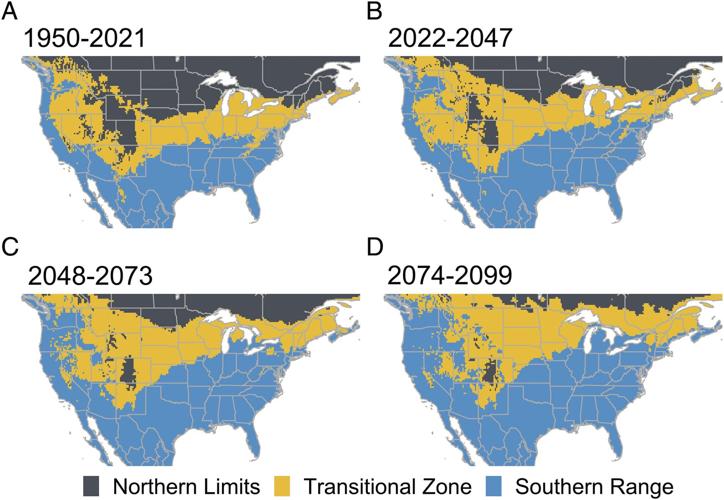
Overwintering ranges of the corn earworm from 1950-2021 (A), along with projected changes in those ranges from 2022-2047 (B), 2048-2073 (C), and 2074-2099 (D).
According to one of those models, the proportional area of the corn earworm’s southern range — the one suitable for surviving winters — could expand from 34% to 56% by the year 2099. The range of the inhospitable northern limits, meanwhile, could shrink from 39% to just 11%. Those trends might eventually allow the pest to overwinter in the U.S. Corn Belt, a region whose winters have historically proven too cold for the earworm. If so, populations of the pest could begin spiking earlier in the Corn Belt, the team noted. And because the species can migrate up to 600 miles, that development could also spell more earworms, and greater yield losses, in northern corn-producing regions.

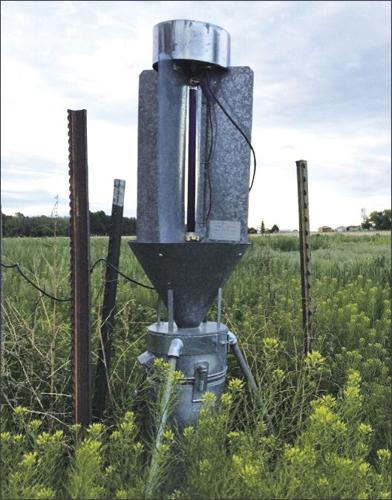
For over 50 years, UNL has collected data about insect populations with a black light trap network set up across the state of Nebraska.
People are also reading…
Reporter Kristen Sindelar has loved agriculture her entire life, coming from a diversified farm with three generations working side-by-side in northeastern Nebraska. Reach her at Kristen.Sindelar@midwestmessenger.com.

Kristen Sindelar
Agriculture Reporter